
Art Blog
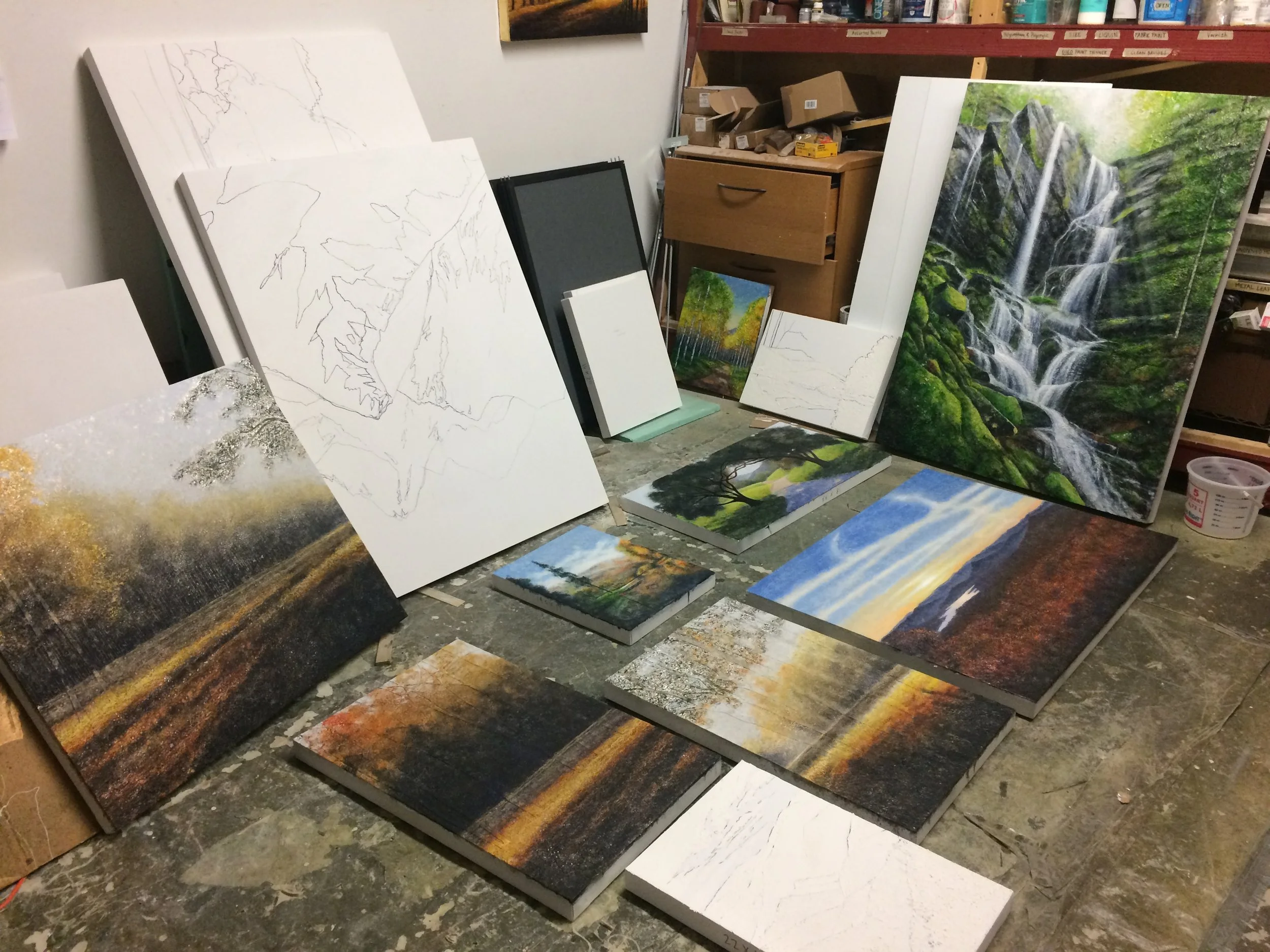
This blog is for posting photos of new artwork and for the expression of sometimes random thoughts of oil painter Stephen St. Claire.
Type Four: Beauty as Identity and Emotional Truth
Some people encounter beauty as order. Others as connection. Others as realized power or radiant presence.
An Enneagram Type Four encounters beauty as recognition of the inner self.
Not recognition in a social sense — not being seen or affirmed by others — but something deeper and more unsettling than that. The experience of something inward finally made visible. Something wordless that has always been there, waiting for form, waiting to exist outside the private interior landscape where it has lived, perhaps for years, without a name.
For the Four, beauty is what says: This is real. This is what it feels like to be alive inside a human soul.
Where other types find transcendence by rising above the self, the Four finds it by descending fully into it — into depth, nuance, contradiction, longing, grief, wonder, and emotional complexity that refuses to be simplified. If Type One seeks purity, Type Two seeks loving connection, and Type Three seeks radiant realization, Type Four seeks authentic being revealed without distortion.
Beauty isn't what improves reality. Beauty is what reveals its emotional truth.
How Type Fours make art
A Type Four artist doesn't simply make art. They translate inner experience into form.
Creation usually begins with a felt intensity — something emotionally unresolved, mysterious, painful, luminous, or deeply meaningful that resists ordinary language. Art becomes the only available medium capable of holding it. The work exists because something within demanded expression and couldn't remain concealed.
Their process is rarely detached. It's immersive. They enter emotional states fully, allowing atmosphere, memory, symbolism, and sensation to guide expression rather than predetermined plan. Meaning unfolds as they work. Tone, depth, texture, emotional color — these aren't decorative choices, they're the substance of the work itself, serving the purpose of conveying interior experience rather than external representation.
They're often drawn to themes of longing, identity, absence, beauty tinged with melancholy, transformation, fragility, the tension between what is felt and what can be expressed. At its most powerful, this produces art that creates genuine recognition in others — not superficial agreement, but the quiet shock of encountering something deeply human that had previously been difficult to name. They give form to what many people feel but cannot articulate. That's not a small thing.
But this gift carries a particular vulnerability.
Because the Four experiences identity through emotional depth, the creative process can become entangled with self-definition. Art stops being expression and starts being proof — proof of authenticity, proof of depth, proof of being real. And this creates subtle but real pressure: to remain emotionally intense, to preserve uniqueness, to resist anything that feels ordinary or resolved or simple. Pain begins to feel artistically necessary. Longing begins to feel like a creative resource that must be maintained rather than moved through.
Sometimes beauty becomes inseparable from suffering.
The paradox is a painful one to name, especially from the inside: in seeking authentic expression, the artist can become attached to the very emotional conditions that make expression feel possible. The wound becomes load-bearing.
How Type Fours receive art
Standing before a work, a Four notices what's beneath the surface. Tone beneath structure. Atmosphere beneath composition. What's implied rather than declared. They sense almost immediately whether something has been truly felt or merely constructed — and constructed work, however technically accomplished, tends to leave them cold.
They're drawn to work that reveals vulnerability, complexity, existential depth — art that acknowledges longing or ambiguity, beauty intertwined with fragility. They're often especially moved by emotional tension that isn't immediately resolved, by the work that holds contradiction rather than tidying it away.
The moment of real beauty, for a Four, is often quiet but intense. A feeling of being understood without explanation. Something inward mirrored faithfully. They don't just see the work — they feel accompanied by it. There's a sense, sometimes almost startling, that the artist has been inside an experience they thought was theirs alone.
But this same sensitivity can narrow perception.
Work that expresses uncomplicated joy, or simplicity without hidden depth, or serenity that doesn't seem to have been earned through difficulty — this can feel to a Four like something essential is missing. They may experience it as shallowness when it might simply be a different emotional register, a different doorway into the real. Beauty that doesn't mirror their interior landscape can be hard to trust.
They seek depth — but depth doesn't always arrive wearing the clothes they expect.
The tension underneath
Type Four lives between the longing to be fully authentic and the fear of being fundamentally incomplete. This is the central tension, and it runs through everything.
They are acutely sensitive to what's missing — in themselves, in life, in experience. This sensitivity is the source of their perceptive power and their emotional richness. But it also creates a persistent undertow: the comparison between what is and what could be, what is expressed and what remains unexpressed, what is present and what feels perpetually, achingly absent.
In art, this becomes both creative engine and emotional burden. They feel driven to capture something essential — and also feel, with most finished work, that expression hasn't quite reached what it sought to reveal. Each piece is an approximation of something just beyond grasp. There's a particular loneliness in that, one that other types may not fully understand.
As viewers, beauty often arrives with bittersweet intensity — moved deeply, yet simultaneously aware of a distance between the experience and something like full belonging within it. The beauty is real. The longing it produces is also real. For a Four, these two things are almost never separate.
What art can open up
The growth edge for a Four is genuinely difficult to articulate — partly because it requires loosening the grip on something that feels like identity itself.
When they create without needing the work to define or justify their uniqueness, something shifts. Expression becomes exploration rather than self-confirmation. Emotional states can be moved through rather than preserved for the meaning they generate. The question stops being does this prove something about who I am and becomes what is actually here?
They may find that authenticity doesn't require intensity — that quiet presence can be just as real as profound feeling. That beauty exists not only in longing, but in simple existence. This can feel, at first, like loss. Like being asked to give up something essential. In practice it tends to feel more like relief.
As viewers, the opening is similar: learning to receive forms of beauty that don't mirror their emotional landscape. Structure, clarity, harmony, ordinariness — not as lesser versions of the real thing, but as different dimensions of reality's fullness. A Four who can genuinely appreciate a Shaker chair or a clear winter afternoon has expanded their world considerably, without losing any of the depth that was already there.
The deepest liberation for a Type Four — and this is hard-won, not easily arrived at — is the discovery that nothing essential is missing. That identity doesn't need to be constructed through emotional differentiation, through maintaining a particular relationship to longing or pain. That being itself is already complete, even when feeling shifts, fades, or simply quiets into ordinary life.
When that becomes visible, beauty stops serving as proof of self.
It becomes participation in something larger than self. And the interior world that was always the Four's great gift — that sensitivity, that depth, that refusal to accept surface as the whole story — doesn't disappear. It just stops being a burden it was never meant to be.
Type Three: Beauty as Significance and Radiance
Some people encounter beauty as order. Others as connection. Others as emotional depth or quiet contemplative truth.
Type Three encounters beauty as aliveness that shines.
For a Three, beauty isn't hidden or subtle. It doesn't whisper. Beauty is what stands forth — what commands attention, what embodies excellence, what radiates presence so fully it becomes undeniable. Where other types find transcendence in stillness or interiority, the Three finds it in intensified vitality. In brilliance. In the unmistakable sense that something has reached its fullest, most compelling expression.
This isn't about surface impressiveness — the Three at depth isn't chasing spectacle. It's something more specific than that: the feeling that potential has been fully realized. That something has become, completely, what it was capable of being. And that this fullness can be seen.
If Type One seeks purity and Type Two seeks loving connection, Type Three seeks embodied significance. Beauty, for them, is proof that something has come fully alive.
How Type Threes make art
A Type Three artist creates with a strong sense of direction. Art isn't just expression — it's manifestation. It's the act of bringing something into visible form that carries impact, clarity, presence.
They tend to be energized by development — refining skill, strengthening execution, increasing expressive power. They're attentive to how art functions in the world: how it's perceived, how it moves people, how effectively it delivers what it's trying to say. Their process is purposeful. They work toward realization, toward making the work fully actual, and they have a sharp instinct for when something is landing and when it isn't.
At their most powerful, this produces work that feels dynamic and alive — art that doesn't merely exist but seems to perform its being. It holds space with confidence. It communicates energy and vitality that people feel immediately, often before they can say why.
Threes also tend to understand something that more inward-facing artists sometimes don't: that art participates in a world of attention. They're often skilled at shaping work that meets that world without simply dissolving into it — a genuine and underrated creative intelligence.
But here the shadow emerges.
Because the Three is so attuned to realization and visibility, the creative process can start to orient itself toward image rather than essence. Expression shapes itself — often subtly, often unconsciously — around what will be effective or impressive before it fully reveals what is inwardly true. They move quickly toward polish, toward completion, toward impact, sometimes bypassing the slower and less defined territories where uncertainty and ambiguity live. The parts of experience that don't resolve into strength. The feelings that don't make good material.
The paradox is a sharp one: in striving to make art fully alive, they can end up at a distance from the parts of themselves that resist being shaped into anything visible at all.
How Type Threes receive art
Standing before a work, a Three notices presence first. Does it carry force? Clarity? Confidence? Does it feel fully realized, or does it feel like it's still searching for itself? They respond strongly to work where vision and execution align — where you can sense the mastery behind the choices, even if you can't articulate it.
Art that feels hesitant or insufficiently formed tends to frustrate them, not because they're hostile to experimentation but because what they value is realization — the movement from potential into clear, embodied expression. A sketch isn't less than a finished painting simply because it's a sketch; but a work that never commits to what it is will lose them.
They're often moved by art that conveys breakthrough — the sense of something being transformed, concentrated, brought to its highest pitch. Where others seek emotional intimacy or structural harmony, the Three can find transcendence in witnessing something reach its fullest power. Beauty feels like expansion.
And yet — this is worth saying clearly — their appreciation isn't shallow. At depth, what moves a Three is authenticity that has been courageously and skillfully embodied. Inner truth made visible with conviction. The highest praise they can offer a work isn't just that it's beautiful. It's that it's powerful.
The tension underneath
Type Three lives between authentic being and adaptive becoming — and few tensions are more quietly exhausting than that one.
They're exquisitely responsive to environments, expectations, the dynamics of recognition. This responsiveness can fuel extraordinary development. It can also blur, over time, the boundary between genuine expression and strategic presentation. In the creative life, this becomes deeply personal. They want to make something real, something with true vitality. But they're also aware — always, at some level — of how the work will land.
The questions can surface without warning: Is this actually mine? Or is this what succeeds? Is this expression — or performance?
As viewers, the same pattern shows up. They gravitate toward realized excellence and can feel less drawn to work that stays unresolved or quietly incomplete — even when that incompleteness is where the work's real depth lives. Some truths don't shine. Some truths hesitate, or stay partially hidden, or refuse to resolve into anything that radiates. The Three, at their edges, can find this hard to trust.
What art can open up
The growth edge for a Three isn't about dampening their drive or becoming indifferent to impact. That drive is real and it produces genuinely compelling work. The shift is about what they're willing to let be seen.
When they create without immediate concern for effectiveness — when they allow something slower, less defined, uncertain, even fragile — another dimension of their expression appears. They start to discover that presence doesn't always come from strength. Sometimes it comes from exposure. From letting something unpolished or unfinished exist visibly, without the armor of execution.
This is uncomfortable territory for a Three. But it's also where their work can become something more than impressive — where it can become, in the fullest sense, true.
As viewers, the same opening is available. Learning to sit with art that doesn't declare itself. That unfolds gradually, resists quick comprehension, carries quiet interiority rather than outward radiance. Learning to find that kind of beauty not as a lesser version of the real thing, but as its own form of realization.
The deepest liberation for a Three is discovering that value doesn't depend on visibility. That being doesn't need to perform in order to exist fully. When they release the need for art to shine, they often find depths of beauty that don't radiate — but endure.
Type Two: Beauty as Loving Connection
Some people encounter beauty as order. Others as truth. Others as intensity or mystery.
The Enneagram Type Two encounters beauty as relationship.
For a Two, beauty isn't fully real until it's shared. A sunset seen alone may be lovely — but a sunset witnessed together, silently understood, exchanged between people without words — that becomes something else entirely. Something closer to sacred. Beauty isn't just perception. It's communion.
Where other types experience transcendence by rising above the human world, the Two finds it by moving more deeply into it — into warmth, closeness, emotional recognition. Beauty is what softens the distance between people. It makes tenderness visible. It dissolves the sense of being separate.
If Type One is looking for perfection of form, Type Two is looking for the awakening of love.
Beauty, for them, isn't complete until it touches someone.
How Type Twos make art
A Type Two artist rarely creates from detachment. Their work tends to be an offering — sometimes consciously, sometimes just by instinct. Art becomes a form of emotional giving, a way of reaching toward others with warmth or understanding or care.
Even when working privately, there's often an imagined other present in the room. Who will receive this? Who will feel understood through this? Who needs what this is trying to say?
What moves them to create is usually emotional movement — affection, empathy, gratitude, longing, tenderness, sometimes sorrow on behalf of someone else. The artwork becomes a vessel carrying feeling outward. And the process itself tends to be responsive rather than strictly controlled: adjusting tone, color, gesture, or subject based on the emotional resonance they sense emerging. Expression, for them, isn't just internal release. It's relational tuning.
Atmosphere matters deeply in their work. Warmth, invitation, intimacy, accessibility. Even when the subject is painful, there's usually a sense of reaching — an emotional hand extended rather than a solitary declaration. At its most powerful, this produces work that feels genuinely humanizing. Art that makes people feel held, or seen, or gently drawn inward.
But this gift has a vulnerability built into it.
Because their creative impulse is so tied to emotional response, their art can become entangled with the need to be received, appreciated, loved. Expression starts to shape itself — often unconsciously — around what will be welcomed rather than what is fully true. Difficult elements get softened. Sentiment gets heightened. Emotional distance gets avoided for fear of disconnection.
And sometimes, in giving so much outward, the deeper and quieter layers of their own inner life stay unexplored.
The paradox: in trying to create connection, they can lose contact with the parts of themselves that can't easily be shared.
How Type Twos receive art
Standing in front of a work, a Two is immediately sensitive to emotional presence. They notice tone, mood, gesture, warmth, vulnerability — whether something is reaching toward them or keeping its distance. Technical mastery alone rarely satisfies them unless it carries feeling alongside it.
They're drawn to art that feels generous. Work that invites rather than excludes, that communicates tenderness or devotion or longing or compassion. A painting that feels cold, purely conceptual, or emotionally sealed may leave them puzzled — they might respect its intelligence, but without relational energy it can feel like something essential is missing.
When art does carry emotional authenticity — even quiet or restrained authenticity — they feel pulled inward. There's a sense of being emotionally accompanied, as though the artist has extended recognition across time and distance. Art becomes meaningful when it affirms shared humanity.
They're often sensitive to cues others might walk right past: the softness of a gesture, the vulnerability in a posture, the feeling of care embedded in how a composition is arranged. Where others analyze or interpret, a Two tends to feel into a work. The question isn't really what does this mean — it's what does this feel like between us?
The tension underneath
Type Two lives between the longing to give love and the fear of being unwanted.
In art, this becomes particularly delicate. They may create in order to connect — but also in order to secure connection. They may respond to work because it genuinely moves them — but also because they're attuned to emotional signals that promise closeness. The line between authentic expression and relational adaptation can blur without them noticing.
As artists, they may avoid emotions that feel too personal, too complex, or not sufficiently welcoming — staying in the realm of shared feeling while steering around deeper solitude. As viewers, they may gravitate toward art that confirms connection while resisting work that sits with separation or interior isolation.
But art sometimes requires standing alone. Expressing something that can't immediately be received. For a Two, that can feel like genuine risk.
What art can open up
The shift for a Type Two isn't about becoming less warm or less generous — those qualities are real gifts, and the work they produce from that place can be deeply moving. The growth is more inward than that.
It's learning to create without anticipating reception. When they do, something new tends to appear — feelings that haven't been shaped for an audience, images that come from solitude rather than connection, expressions that don't resolve neatly into warmth or accessibility. They start to find that their inner life contains depths that aren't defined by responsiveness. That beauty can emerge from quiet self-awareness just as much as from relational exchange.
As viewers, they can begin encountering art that feels restrained or emotionally distant — and instead of reading that distance as a lack of care, start to recognize it as another kind of presence. Not all beauty reaches outward. Some beauty simply exists, without needing to embrace.
The real liberation is discovering that love doesn't disappear when they stop extending themselves. That connection doesn't require constant giving. That beauty can exist in stillness, in solitude, in interior depth — and that they won't be abandoned there.
Type One: The Pursuit of Perfected Beauty
Some people experience beauty as an emotional opening. Others as pure sensation, or mystery, or the thrill of something they can't quite name.
Enneagram Type One’s experiences beauty as rightness.
Not correctness in a narrow, technical sense — something deeper than that. A feeling that reality has, briefly, come into proper alignment. Nothing excessive, nothing out of place, nothing that shouldn't be there. For a One, beauty is what's left when everything distorting or unnecessary has been stripped away. It's not atmospheric. It's not expressive in the way we usually mean that word. It's closer to moral and structural coherence made visible.
When a One encounters it, something settles. Not excitement — more like relief. A quiet internal exhale. Yes. This is true. This is how it should be.
Beauty, for them, isn't escape. It's correction.
How Type Ones make art
A Type One artist rarely creates casually. Even when working by instinct, there's an underlying sense of responsibility toward the work — a feeling that art has to justify its existence.
What drives them isn't self-expression in the conventional sense. They're not primarily trying to put themselves on display. They're trying to serve whatever is genuinely worth showing. To refine perception. To remove distraction. To present something in its most truthful, disciplined form.
Their process tends to be marked by attentiveness, restraint, and revision. They notice imbalance quickly — when proportion is slightly off, when an emotional tone feels exaggerated, when something has been included for effect rather than necessity. The work moves through stages of correction, guided by an internal standard that feels less like personal preference and more like an objective fact about how things ought to be.
The results can be remarkable. Compositions that feel inevitable. Forms that feel fully resolved. Expression that's been distilled rather than amplified. Even work that looks simple may be the product of an enormous amount of internal filtering.
But this strength has a shadow side.
When the internal standard gets exacting enough, the creative process starts to tighten. Spontaneity begins to feel irresponsible. Experimentation feels indulgent. And what's most human about expression — its irregularity, its vulnerability, its emotional ambiguity — starts to feel dangerously close to disorder. The artist refines and refines until vitality itself becomes controlled.
The paradox is a painful one: in trying to honor what's most worthy, they end up restricting what's most alive.
How Type Ones receive art
Standing in front of a work, a One is immediately sensitive to coherence. They notice structure, proportion, whether the artist has been genuinely careful — not just technically skilled but internally honest. Sloppiness is rarely invisible to them. Neither is excess. When something feels off, they feel it physically, like a quiet tension in the body, even if they can't immediately say why.
But when art holds complexity within clarity — when it embodies order without rigidity — something real happens. They experience peace. Not passive calm, but a grounded sense that meaning has been honored rather than distorted. The work feels trustworthy.
They're often most moved by restraint. Beauty that doesn't demand attention but commands respect. Quiet harmony. Precision that feels almost reverent. Where others chase emotional intensity, a One can find transcendence in rightness so complete that nothing in the work calls attention to itself.
The highest praise they can offer isn't this excited me. It's this is true.
The tension underneath
Type One lives between devotion to excellence and fear of corruption — and in art, that tension becomes unusually visible.
They want to make something pure. Something that doesn't betray reality through distortion or exaggeration. But the act of expression is inherently subjective and messy and incomplete. No work can ever fully embody the ideal they sense. And so there's a persistent, quiet pressure: the feeling that the work is never quite finished, never entirely faithful to what it could have been.
As viewers, the same tension shows up differently. They can struggle to receive beauty that's imperfect but alive — work that holds contradiction or unresolved emotion. The need for coherence can sometimes make it hard to stay open to meaning that arrives through ambiguity rather than resolution.
They're looking for redemption from disorder. But life doesn't always cooperate.
What art can open up
The growth edge for a Type One isn't about lowering their standards. Their sensitivity to integrity is a genuine gift — it produces work of real discipline and perception. The shift is more subtle than that.
It's learning to create without immediately correcting. When they allow that, something unexpected shows up: vitality that can't be engineered, expression that couldn't have been pre-justified. They start to discover that beauty doesn't only emerge from perfection. It also emerges from presence.
And as viewers, they can begin to encounter work that doesn't resolve cleanly — layered, emotionally complex, left deliberately open — and instead of reading that as a failure of coherence, start to experience it as an honest reflection of how deep reality actually goes.
The liberation isn't abandoning the pursuit of rightness. It's discovering that reality contains forms of order larger than human control. That beauty doesn't always need to be perfected to be real.
Sometimes it's already whole, even unfinished.
Why Personality Shapes the Way We Create and Experience Art
I have found that here are moments when a piece of art stops you cold. It’s not always because the art is technically impressive or because you're supposed to admire it, but because something in it feels weirdly, privately true — like it was made about something you've never said out loud. You don't fully understand why it hits you. You just know that it does.
And then…the person next to you shrugs and moves on.
This gap between responses is real (just go to any art museum and do some people watching!), and it's not really about education or exposure or taste, though we usually reach for those explanations first. I think it runs deeper than that. It has to do with the particular way each of us is organized inside — what we pay attention to, what we're hoping to find, what we unconsciously believe beauty is for.
This blog series is an attempt to map that territory, using the Enneagram as a guide.
The Enneagram describes nine distinct patterns of inner life — nine ways the psyche prioritizes experience and constructs meaning. Most people encounter it as a personality typing system, which it partly is. But it's more interesting than that. It's a map of what we're each fundamentally seeking: safety, identity, understanding, connection, harmony, significance. Different hungers, different strategies, different blind spots.
Art makes these patterns visible in a way that ordinary life usually doesn't. In conversation we can mask. In decisions we rationalize. But in what moves us — and what doesn't — we're surprisingly exposed. What you notice first in a painting. What you dismiss. Whether you want a work to challenge you or hold you. Whether technical precision feels like respect or avoidance. Whether emotional rawness feels honest or indulgent. All of it reflects something structural about how you approach meaning itself.
The same is true from the other side. Artists don't just choose subjects and styles — they reveal, often without intending to, what they believe beauty should accomplish. Some artists seem to be trying to get something right. Others are trying to feel something fully. Others want to understand, or disturb, or connect, or transcend. These aren't just aesthetic preferences. They're expressions of how the person is built.
Underlying all of it, I think, is a single shared impulse: the desire to get outside yourself, even briefly. To contact something larger than your own habits and preoccupations. We use different words for this — awe, resonance, catharsis, clarity, peace — but they're pointing at the same thing. Beauty, at its best, loosens something. It lets you down out of your head and into something more spacious.
The interesting thing the Enneagram reveals is that each type reaches for that spaciousness through a different door. Some through perfection. Some through emotional union. Some through penetrating understanding. Some through sheer intensity. Some through harmony. Each doorway is real — each one genuinely leads somewhere. But each also carries its own trap, a way of getting stuck in the entrance and mistaking the threshold for the room.
Over nine posts, this series will look at each type through two lenses: how they make art, and how they receive it. For each, we'll ask what drives them to create at all, what they're hoping to find when they look at someone else's work, where their instincts become a strength, and where those same instincts narrow into a limitation.
My aim isn't to slot artists into categories or to diagnose anyone. It's to use these patterns as a thinking tool — a way of noticing things that might otherwise stay invisible. Why certain creative struggles keep repeating. Why some work feels complete and alive to one person and hollow to another. Why the art we resist sometimes says more about us than the art we love.
I should be honest that I'm not a neutral observer here. My own temperament runs toward questions of emotional depth, authenticity, and identity — which is both an asset for this kind of writing and a built-in bias. I'll try to be clear when I'm speaking from that vantage point rather than a general one.
What I hope you take from this, more than anything, is a shift in how you ask questions about art. Not just do I like this?but what kind of beauty is this pursuing, and why does it land differently for different people? And maybe, occasionally, the harder question: what kind of beauty have I been walking past without knowing it?
Nobody approaches art from nowhere. We all come from somewhere specific. Understanding where that somewhere is doesn't diminish the experience — it opens it up.
My Most Ambitious Project to Date: Pont Neuf at Dusk
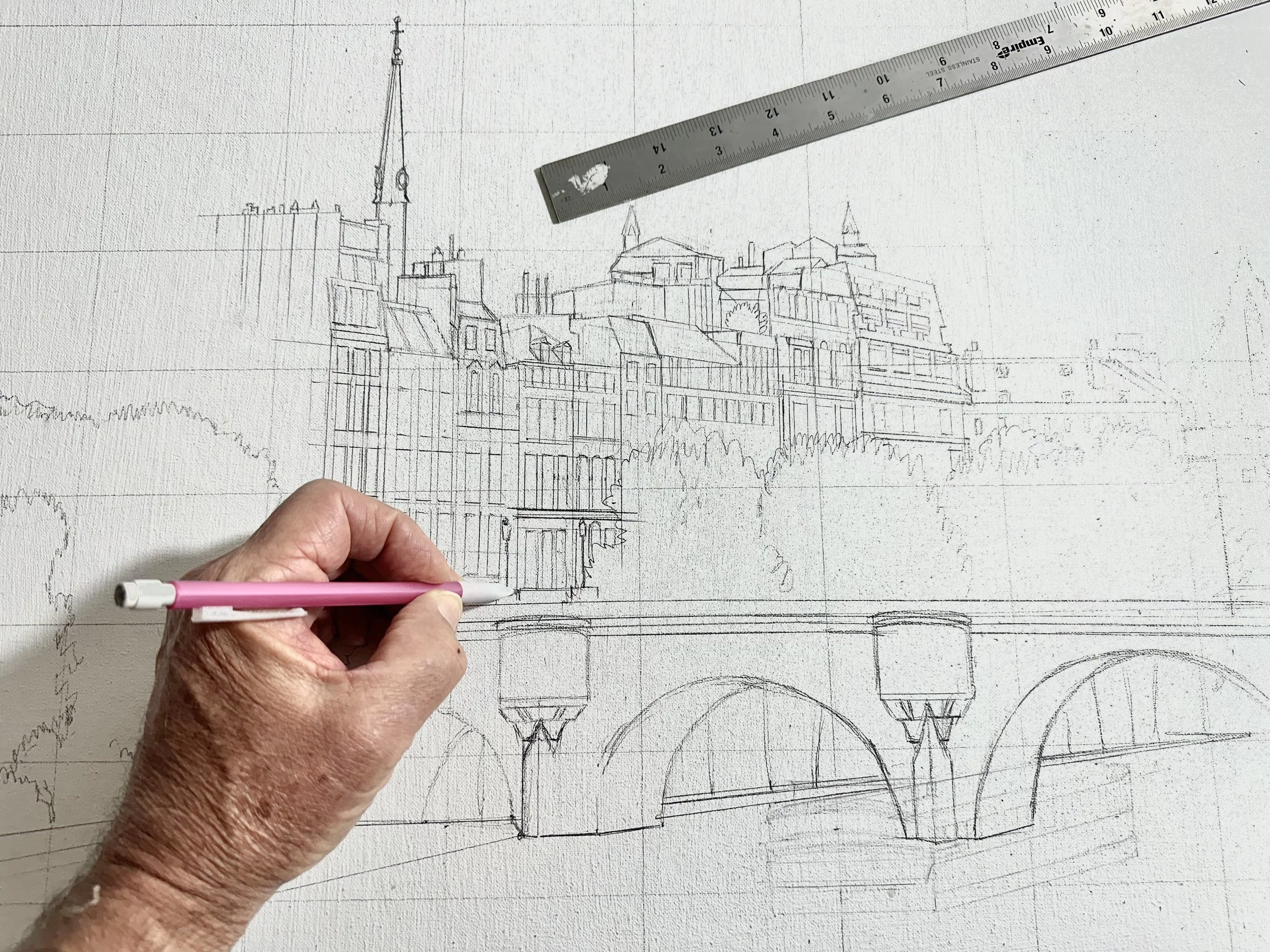
There are moments in an artist's journey when you know you're pushing yourself into entirely new territory. This is one of those moments.
For months now, I've been immersed in what has become the most ambitious project I've ever undertaken: a depiction of the Pont Neuf in Paris at dusk. The composition's complexity has demanded every bit of patience, skill, and vision I can muster—and I'm still in the early stages of bringing it to life.
A Labor of Love (and Layers)
This week marks a significant milestone. After months of careful planning and preparation, I'm finally moving into the texture and carving stage. This is where the magic really happens—where every element is meticulously built up, sanded, and shaped by hand before the metallic leaf and oil paint are applied.
If you're familiar with my work, you know that texture is my language. It's how I create depth, movement, and emotion in my pieces. My paintings typically feature three or four layers of carefully crafted texture. But this piece? This beast is going to require over fifty layers.
Yes, you read that right. Fifty.
Embracing the Joyous Tedium
I'll be honest—the scale of what lies ahead is both exhilarating and daunting. Each layer needs to be applied with intention, allowed to set, then carved and refined before the next can be added. It's painstaking work that demands absolute focus and precision. One misstep, and hours of progress can be compromised.
But here's the thing: I'm learning to lean into what I call the "joyous tedium" of this process. There's something meditative about the repetition, something deeply satisfying about watching a vision slowly, methodically take form beneath your hands. This isn't the instant gratification of a quick sketch—this is a marathon, a test of dedication and craft.
Why the Pont Neuf?
The Pont Neuf holds a special place in my heart. Despite its name—which means "New Bridge"—it's actually the oldest standing bridge across the Seine in Paris. There's something poetic about that contradiction, something that speaks to the layers of history, the passage of time, and the enduring beauty of great architecture.
Capturing it at dusk adds another dimension entirely. That fleeting golden hour when the light softens, the shadows deepen, and the city takes on an almost dreamlike quality—it's a challenge I couldn't resist. The interplay of light on stone, the reflection in the water, the way the bridge connects two banks and two worlds... it all needs to be translated into texture and metallic shimmer.
The Challenge Ahead
This isn't my biggest piece in terms of physical dimensions, but it's absolutely the most complex challenge I've ever set for myself. Every architectural detail, every play of light, every ripple in the water—it all needs to be considered, planned, and executed with precision.
The months I've already invested have taught me so much about patience, about trusting the process, and about the difference between complexity and chaos. Now, as I stand at the threshold of the most intensive phase, I'm taking a deep breath and preparing for the journey ahead.
Following the Journey
I'll be sharing progress updates as this piece evolves, layer by layer. Some weeks might show dramatic transformations; others might reveal changes so subtle they're almost invisible to anyone but me. But each layer, each carved detail, each moment of careful work is bringing me closer to the vision I've been carrying in my mind's eye.
I can't wait to see this come to life. And I'm grateful to have you along for the ride.
The Human Rhythm: Why the Golden Section Matters
When we discuss the Golden Section in the human body, we must tread carefully. The human form does not—and should not—conform perfectly to a mathematical ideal. You only need to spend an afternoon at the beach to see the truth: bodies are beautifully varied, asymmetrical, and shaped by the messy realities of genetics, culture, and age. Yet, despite this diversity, proportional relationships mirroring the Golden Section appear again and again—not as rigid rules, but as persistent tendencies.
The Artist’s Intuition
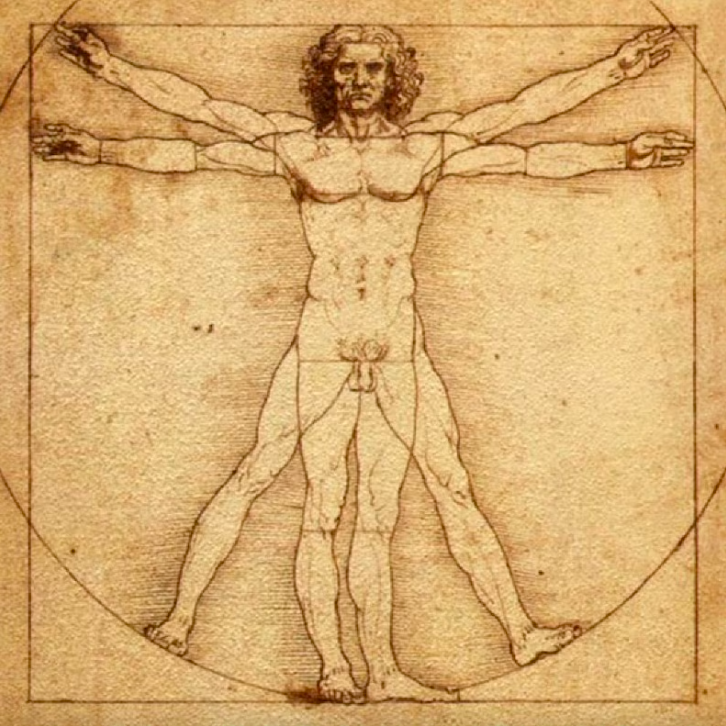
Artists noticed this long before scientists attempted to quantify it. Classical sculptors and Renaissance painters studied the body obsessively, searching for proportions that felt balanced rather than merely "correct." Leonardo da Vinci’s Vitruvian Man is less a diagram of perfection and more an exploration of relationship—how the body organizes itself around a center. From the ratio of the navel to total height to the spacing of facial features, many of these measurements hover near that familiar 62%–38% division.
Beyond Beauty: The Logic of Stability
Why does this matter? Because humans are hard-wired to read bodies. Long before we think consciously, we register whether a form looks physically coherent—whether it could plausibly stand, move, or bear its own weight.
This isn't about "attractiveness" in a commercial sense; it’s about intelligibility. When the relative sizes of the head, torso, and limbs fall within these familiar ranges, the figure reads as stable and alive. When these relationships are absent, the body feels awkward or weightless, even if the viewer can’t quite pinpoint why. A body with natural proportion makes visual sense because it appears governed by gravity and anatomy. We believe it could walk, reach, or turn without collapsing. That belief is what creates "presence."
The Anchor of the Figure
The Golden Ratio approximates how mass is distributed around our center of gravity. When artists use these proportions—even loosely—the figure feels anchored in space. This explains why even highly stylized figures can feel convincing; they may exaggerate or simplify, but as long as they preserve these key proportional rhythms, the body still "adds up." The viewer doesn’t admire the math, but they trust the figure.
This logic extends into movement. Walking, reaching, and bending all involve proportional relationships that minimize strain and maximize efficiency. Over time, these mechanical efficiencies shape our form. In the human body, what looksbalanced often is balanced.
Recognizing the Rhythm
For the artist, the Golden Section is not a formula to be imposed, but an underlying rhythm to be recognized. It provides a shorthand for placement, scale, and emphasis—helping us decide where the weight should rest and where a gesture should resolve.
In the end, these proportions remind us that we are not separate from the patterns we admire in the world around us. The ratios we find beautiful in art and nature are written, imperfectly but unmistakably, into ourselves.
Nature’s Quiet Mathematics: The Golden Section at Work
Nature doesn't sit down with a calculator. It doesn't plan or measure. And yet somehow, the Golden Section keeps showing up—not because nature's trying to win a beauty contest, but because it works.
Take plants. Leaves spiral around stems at angles that relate to the Golden Ratio, which means each leaf gets its fair share of sunlight without blocking the others. Sunflowers pack their seeds in interlocking spirals based on Fibonacci numbers (which get closer and closer to the Golden Ratio the higher you go). Pinecones and pineapples do the same thing. It's not about looking pretty—it's about not wasting space.
Then there are shells and storms. A nautilus shell grows by making each new chamber a little bigger than the last, always by the same ratio. The result is that perfect spiral you've probably seen in photos. The shell gets bigger, but its shape stays balanced. Hurricanes spiral the same way. So do some galaxies. These aren't copying each other—they're all solving similar problems about how to grow without falling apart.
As for us? Our bodies show hints of it too. The ratio between your forearm and hand. Where your belly button sits relative to your height. The spacing of your eyes and nose. None of this is exact, and people come in all proportions, but the Golden Section shows up often enough that it makes you wonder: maybe what we find beautiful is just what our bodies recognize as familiar.
What I think nature's really showing us is that the Golden Section isn't about being perfect. It's about lasting. Growth that follows this ratio spreads things out evenly, avoids clutter, and bends without breaking.
Maybe that's why artists and architects keep coming back to it. When we use the Golden Section, we're not inventing something new—we're borrowing a blueprint that's already been tested. Turns out beauty might just be efficiency in disguise.
The Golden Section in Architecture: Building with Human Scale
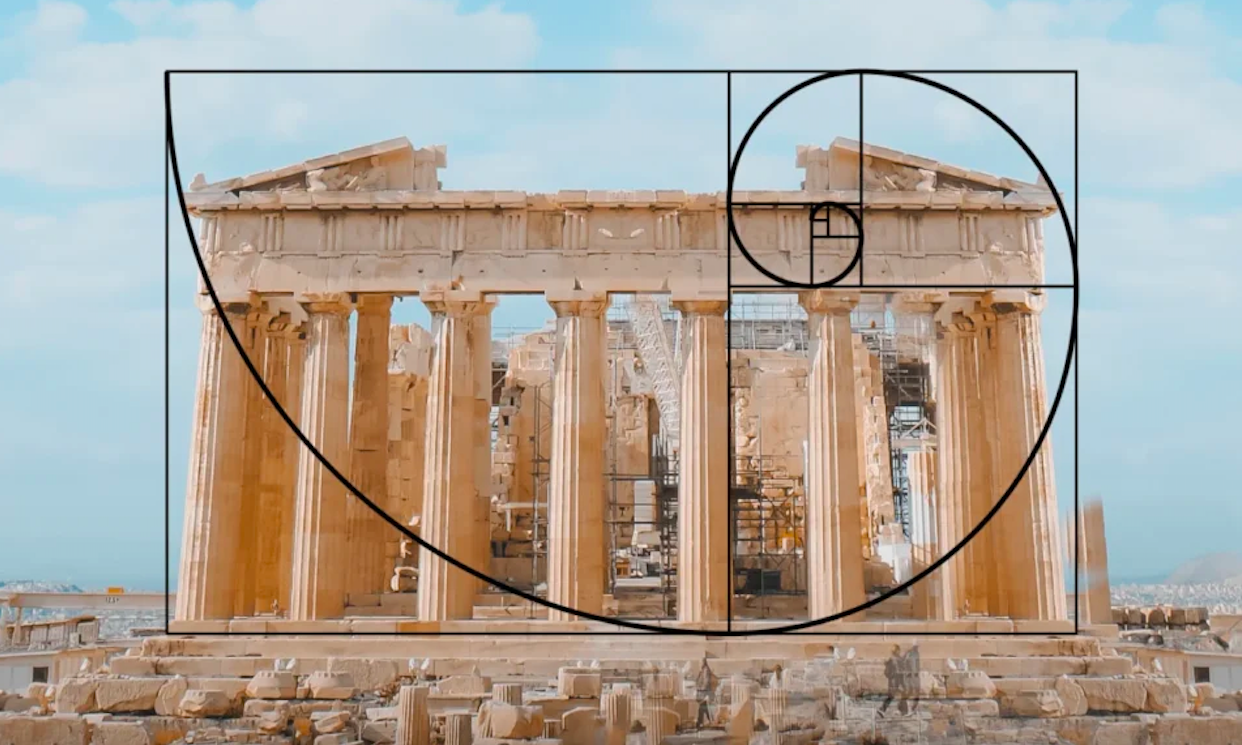
The Golden Section and the Parthenon
Architecture is where the Golden Section stops being abstract and starts shaping the rooms you walk through every day. A painting hangs on a wall. A building is the wall—and the floor, and the ceiling. When the proportions work, you relax without thinking about it. When they don't, something just feels off, even if you can't say why.
For centuries, builders have used the Golden Section to create spaces that feel right. In ancient Greece, the proportions show up all over temple design—façades, columns, even the angle of a pediment. Take the Parthenon. It's not that someone measured every stone to match the ratio exactly. It's more that the whole thing keeps circling back to it. The effect? A building that feels grounded, balanced, like it's been there forever.
Fast forward to the Renaissance, and architects like Leon Battista Alberti and Andrea Palladio are obsessed with reconnecting buildings to the human body. They noticed that a room split roughly 62%–38% just works. Windows spaced that way don't feel cluttered or lonely. A staircase built on that rhythm doesn't wear you out or make you rush—it just flows.
The real magic is in scale. The Golden Section helps bridge the gap between "too big" and "too small." A cathedral might reach toward the sky, but the doorways, side aisles, little chapels—they're sized so you don't feel swallowed up. Even today's architects, sometimes without realizing it, fall back on similar ratios when they're figuring out how tall a wall should be or how much glass to put in.
Here's the thing: the Golden Section isn't a look. It doesn't care if you're building with marble or concrete, Gothic arches or clean modernist lines. It's just a rhythm underneath everything, a way of organizing space that lines up with how we actually see and feel balance.
The best architecture, like the best art, doesn't show you the math. It just lets the proportions do their thing quietly in the background. When the Golden Section is working, you don't notice it at all.
You just feel like you belong there.
The Golden Section in Music: Proportions You Can Feel
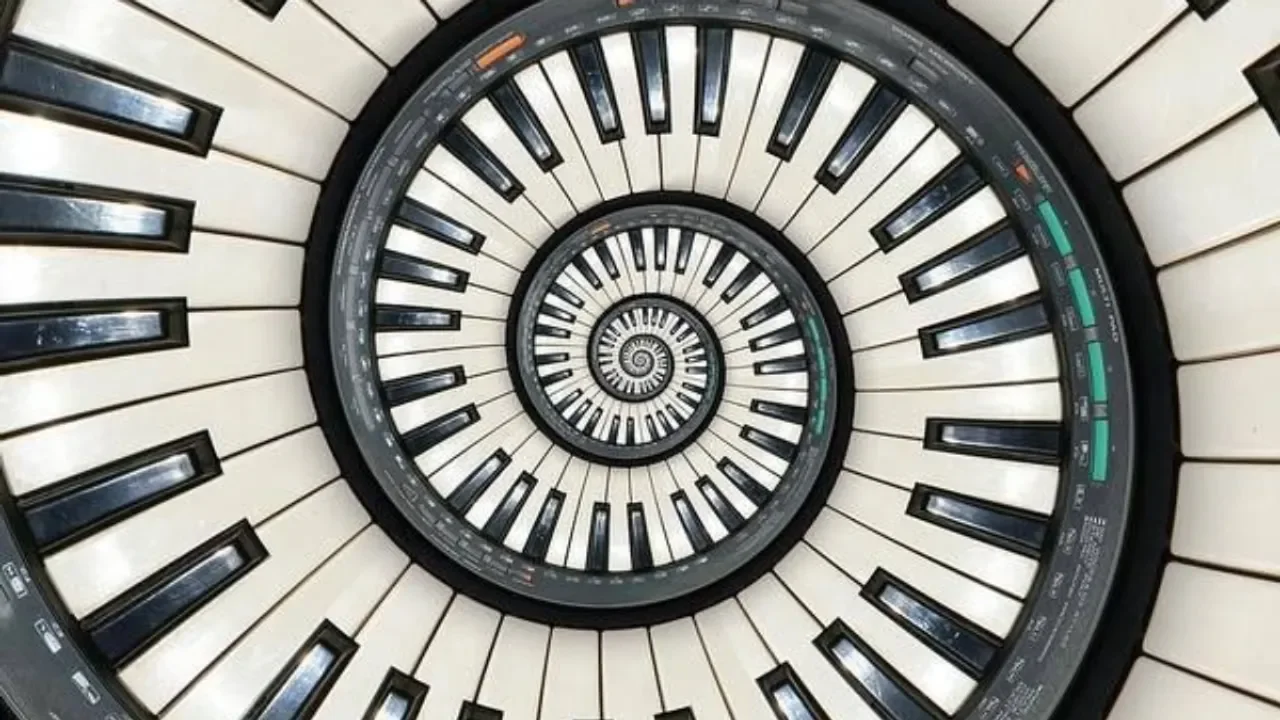
We often think of music as pure emotion—a rush of sound that hits us in the chest. But underneath that feeling, music is an architecture built out of time. Just as a painter uses the Golden Section to guide your eye across a canvas, a composer uses it to guide your ear through a story.
Why the Middle Isn't the Peak
If a song is five minutes long, you’d think the "big moment" should happen right at the 2:30 mark. But in practice, that usually feels a bit... flat. It’s too symmetrical.
Instead, the most hair-raising climaxes usually land around 62% of the way through. It’s that sweet spot where the tension has built up just long enough to feel earned, but there’s still enough time left to breathe before the end. It’s not just a math trick; it’s a reflection of how we actually experience life—think of the way a long exhale feels or the way a wave builds slowly before it finally breaks.
From Bach to the Radio
Classical heavyweights like Bach and Beethoven seemed to have an internal compass for this. If you look at the dramatic return of the main theme in Beethoven’s Fifth Symphony, it lands almost exactly on that Golden Ratio point. Later, Béla Bartók took it a step further, intentionally obsessed with mapping out his notes and phrases to match these natural patterns.
But you don’t need a tuxedo to hear this in action. Listen to almost any great pop song. The bridge usually hits right after the second chorus—roughly two-thirds into the track. It’s that perfect "pivot" moment that keeps the song from getting repetitive and pushes us toward the finish line.
The Instinct for Balance
The best part? You don’t need a degree in music theory to "get" it. We’re wired to respond to these proportions. We recognize them in the way trees grow or the way we breathe.
In the end, the Golden Section isn't a rigid set of rules or a cheat code for a hit song. It’s more like a quiet heartbeat underneath the melody. It’s what makes a piece of music feel less like a sequence of notes and more like something that is—quite literally—alive.
Blog Archive
-
2026
- Apr 16, 2026 Conversations Across Time: Sandro Botticelli Apr 16, 2026
- Apr 11, 2026 Conversations Across Time: Donatello Apr 11, 2026
- Apr 6, 2026 Conversations Across Time: Jan van Eyck Apr 6, 2026
- Apr 1, 2026 Conversations Across Time: Leonardo da Vinci Apr 1, 2026
- Mar 29, 2026 A Closing Reflection: Nine Ways Beauty Finds Us Mar 29, 2026
- Mar 27, 2026 Type Nine: The Recognition of Wholeness Mar 27, 2026
- Mar 24, 2026 Type Eight: The Encounter with Unfiltered Reality Mar 24, 2026
- Mar 18, 2026 Type Seven: The Pursuit of Radiant Possibility Mar 18, 2026
- Mar 16, 2026 Type Six: Beauty as Trust, Stability, and the Restoration of Ground Mar 16, 2026
- Mar 11, 2026 Type Five: Beauty as Insight and Essential Understanding Mar 11, 2026
- Mar 8, 2026 Type Four: Beauty as Identity and Emotional Truth Mar 8, 2026
- Mar 5, 2026 Type Three: Beauty as Significance and Radiance Mar 5, 2026
- Mar 1, 2026 Type Two: Beauty as Loving Connection Mar 1, 2026
- Feb 26, 2026 Type One: The Pursuit of Perfected Beauty Feb 26, 2026
- Feb 22, 2026 Why Personality Shapes the Way We Create and Experience Art Feb 22, 2026
- Feb 11, 2026 My Most Ambitious Project to Date: Pont Neuf at Dusk Feb 11, 2026
- Feb 8, 2026 The Human Rhythm: Why the Golden Section Matters Feb 8, 2026
- Jan 31, 2026 Nature’s Quiet Mathematics: The Golden Section at Work Jan 31, 2026
- Jan 24, 2026 The Golden Section in Architecture: Building with Human Scale Jan 24, 2026
- Jan 16, 2026 The Golden Section in Music: Proportions You Can Feel Jan 16, 2026
- Jan 14, 2026 The Golden Ratio in Art: Where Math Meets Beauty Jan 14, 2026
-
2025
- Dec 25, 2025 Finding Peace in the Christmas Chaos Dec 25, 2025
- Dec 14, 2025 Seeing Meaning: How Medieval Art Spoke Without Words Dec 14, 2025
- Nov 19, 2025 The Matterhorn and the Magic of Transformation Nov 19, 2025
- Nov 13, 2025 Commissions vs Completed Pieces…Which is Right for You? Nov 13, 2025
- Oct 28, 2025 What can I learn from Makoto Fujimura in 2025? Oct 28, 2025
- Oct 12, 2025 What can I learn from Pablo Picasso in 2025? Oct 12, 2025
- Oct 10, 2025 What can I learn from Raphael in 2025? Oct 10, 2025
- Oct 8, 2025 What can I learn from Georgia O’Keefe in 2025? Oct 8, 2025
- Sep 28, 2025 What can I learn from Caravaggio in 2025? Sep 28, 2025
- Jul 25, 2025 What can I learn from Thomas Gainsborough in 2025? Jul 25, 2025
- Jul 20, 2025 What can I learn from Leonardo da Vinci in 2025? Jul 20, 2025
- Jul 15, 2025 What can I learn from Michelangelo in 2025? Jul 15, 2025
- Jul 2, 2025 What can I learn from Van Gogh in 2025? Jul 2, 2025
- Jun 25, 2025 What can I learn from Renoir in 2025? Jun 25, 2025
- Jun 23, 2025 What can I learn from Claude Monet in 2025? Jun 23, 2025
- Jun 21, 2025 Using Complimentary Colors for Shading Jun 21, 2025
- Jun 17, 2025 How and When to use Complimentary Colors Jun 17, 2025
- May 30, 2025 Perspective in Art 101: How to Make Your Drawings Pop Off the Page May 30, 2025
- May 26, 2025 How to Really Understand Medieval Art May 26, 2025
- May 22, 2025 Staying Creative May 22, 2025
- May 10, 2025 AT Experience May 10, 2025
- May 3, 2025 Go Take a Walk! May 3, 2025
- Apr 25, 2025 Periods of Art: Mannerism Apr 25, 2025
- Apr 17, 2025 Finding Meaning in the Abstract: Pointers for Understanding Modern Art Apr 17, 2025
- Apr 16, 2025 The Quiet Labor Apr 16, 2025
- Apr 12, 2025 To Art: a Poem Apr 12, 2025
- Apr 5, 2025 The Enchantment of Art Nouveau Apr 5, 2025
- Mar 23, 2025 "What was it like going to art school?" Mar 23, 2025
- Mar 18, 2025 Why I Love the Rococo Period Mar 18, 2025
- Mar 4, 2025 Expressing Joy Through Art Mar 4, 2025
- Feb 28, 2025 The Connection Between Art and Frustration Feb 28, 2025
- Feb 23, 2025 Neoclassicism: Bringing Ancient Style Back to Life Feb 23, 2025
- Feb 18, 2025 On my walk Feb 18, 2025
- Feb 12, 2025 Art at the Very Beginning Feb 12, 2025
- Feb 10, 2025 Monet and Renoir: A Personal Reflection on Their Differences Feb 10, 2025
- Feb 6, 2025 The Fount of Creation: A poem Feb 6, 2025
- Feb 1, 2025 The Connection Between Art and Grief Feb 1, 2025
- Jan 29, 2025 A Journey Through Medieval Art: Stories from the Middle Ages Jan 29, 2025
- Jan 26, 2025 The Story of Art: The Romantic Period Jan 26, 2025
- Jan 16, 2025 The Relationship Between Music and Painting Jan 16, 2025
- Jan 12, 2025 Periods of Art: Baroque Jan 12, 2025
- Jan 11, 2025 Marketing your Artwork Jan 11, 2025
- Jan 7, 2025 Exploring the Golden Ratio in Art Jan 7, 2025
- Jan 3, 2025 Artistic Enlightenment: Lessons from Italy Jan 3, 2025
-
2024
- Dec 29, 2024 Why Travel is Crucial for Unleashing Creativity Dec 29, 2024
- Dec 22, 2024 Steps to Becoming a Full-Time Professional Artist Dec 22, 2024
- Dec 10, 2024 How to Determine Subject Matter for Your Next Painting Dec 10, 2024
- Dec 3, 2024 My Favorite Artist Dec 3, 2024
- Dec 1, 2024 Creativity and Exploration Dec 1, 2024
- Nov 13, 2024 Impressionistic Heroes of Mine Nov 13, 2024
- Nov 10, 2024 "So how do you DO this?" Nov 10, 2024
- Nov 3, 2024 Discovering the Bond Between Nature and Art Nov 3, 2024
- Nov 1, 2024 How Art Can Help Us Cope with Stress Nov 1, 2024
- Oct 27, 2024 How to Select the Perfect Art for Your Home Oct 27, 2024
- Oct 24, 2024 What to Do When You Feel Like Giving Up as an Artist Oct 24, 2024
- Oct 14, 2024 Book Review: The Artist’s Way Oct 14, 2024
- Oct 11, 2024 How to find Inspiration for your art Oct 11, 2024
- Sep 24, 2024 Crafting the Perfect Title for Your Artwork Sep 24, 2024
- Sep 14, 2024 The Worst Advice I’ve Ever Received as an Artist Sep 14, 2024
- Sep 8, 2024 Overcoming Artist’s Block: Practical Tips Sep 8, 2024
- Aug 30, 2024 Exploring Lessons from Vincent van Gogh Aug 30, 2024
- Aug 29, 2024 Why Purchase Original Artwork? Aug 29, 2024
- Aug 25, 2024 How do you determine the best size artwork to purchase? Aug 25, 2024
- Aug 15, 2024 "So, what's this painting worth?" Aug 15, 2024
- Aug 9, 2024 What color art would go best in my home? Aug 9, 2024
- Aug 4, 2024 How to deal with criticism as an artist Aug 4, 2024
- Mar 27, 2024 Question 12: "What do you do when you have a mental block?" Mar 27, 2024
- Mar 27, 2024 New Goals + Winter Months = "Outside the Box" Creativity Mar 27, 2024
- Jan 8, 2024 Question 11: Where do you get inspiration for your work? Jan 8, 2024
-
2023
- Sep 11, 2023 Question 10: "Do you have your work in galleries?" Sep 11, 2023
- Aug 27, 2023 Question 9: "How do you manage the business side of your art business?" Aug 27, 2023
- Aug 20, 2023 Question 8: "Do you advertise?" Aug 20, 2023
- Aug 13, 2023 Question 7: "How do you price your work?" Aug 13, 2023
- Jul 30, 2023 Question 6: "What are the positive points and negative points about having an 'open studio'?" Jul 30, 2023
- Jul 19, 2023 Question 5: "Would you mind critiquing my work at some point?" Jul 19, 2023
- Jul 1, 2023 Question 4: "Would you recommend art school, and if so, how would you find the right one?" Jul 1, 2023
- Jun 24, 2023 Question 3: "Did you go to art school? If so, where?" Jun 24, 2023
- Jun 16, 2023 Question 2: "How long have you been selling your work professionally?" Jun 16, 2023
- Jun 10, 2023 Question 1..."How long have you been an artist?" Jun 10, 2023
- Jun 4, 2023 So, you're thinking about art as a career? Jun 4, 2023
- Mar 3, 2023 "What inspires you as an artist?" Mar 3, 2023
- Feb 15, 2023 Should I buy a completed painting OR commission a painting? Feb 15, 2023
- Jan 23, 2023 "How do you Price Your Work?" Jan 23, 2023
-
2022
- Dec 1, 2022 An Artist in Italy (Part 3) Dec 1, 2022
- Nov 16, 2022 An Artist in Italy (Part 2) Nov 16, 2022
- Nov 8, 2022 An Artist in Italy (Part 1) Nov 8, 2022
- Oct 10, 2022 When Remodeling a Home... Oct 10, 2022
- Aug 22, 2022 How to Handle Failure Aug 22, 2022
- Jun 3, 2022 "What is it like being an artist these days?" Jun 3, 2022
- May 21, 2022 "Are All Artists Introverts?" May 21, 2022
- May 9, 2022 What Makes a Painting a Good Piece of Art? May 9, 2022
- Apr 1, 2022 The Story Behind…"Gentle Showers on a Summer Afternoon" Apr 1, 2022
- Mar 19, 2022 The Story Behind..."Blue Ridge Summer Afternoon" Mar 19, 2022
- Feb 18, 2022 Your Opinion Please... Feb 18, 2022
- Jan 22, 2022 What's in a Compliment? Jan 22, 2022
-
2021
- Dec 25, 2021 My Christmas Present to Joy Dec 25, 2021
- Dec 12, 2021 Deep in the Heart Dec 12, 2021
- Nov 29, 2021 "How do you know you're done with a painting?" Nov 29, 2021
- Nov 1, 2021 Does it Matter What Other People Think of My Art? Nov 1, 2021
- Oct 12, 2021 Creatively Inhaling... Oct 12, 2021
- Aug 31, 2021 More Fun than I Know What to do With Aug 31, 2021
- Aug 13, 2021 “Are You Self Taught?” Aug 13, 2021
- Jul 21, 2021 New Art Gallery on the West Coast Jul 21, 2021
- Jun 23, 2021 "Art from the Heart" vs "Commissioned Art" Jun 23, 2021
- May 28, 2021 More Questions and Answers May 28, 2021
- May 17, 2021 What does Diversity have to do with honest artwork? May 17, 2021
- May 4, 2021 More Questions and Answers May 4, 2021
- Apr 30, 2021 Questions and Answers Apr 30, 2021
- Apr 16, 2021 And the Next Blog Post is... Apr 16, 2021
- Mar 10, 2021 How do you create when you don't feel like creating? Mar 10, 2021
- Feb 11, 2021 "Mullaghmore": The Story Behind the Painting Feb 11, 2021
- Jan 28, 2021 A Look Back to "The Dark Year" Jan 28, 2021
- Jan 17, 2021 Studio Expansion...Hello Northeast! Jan 17, 2021
- Jan 7, 2021 How to Create the Perfect Painting Jan 7, 2021
-
2020
- Dec 1, 2020 A personal answer to a personal question... Dec 1, 2020
- Nov 4, 2020 Using Art to Express my Politics Nov 4, 2020
- Oct 16, 2020 Sometimes, just "having fun" is a good enough reason Oct 16, 2020
- Oct 4, 2020 The Best Painting Delivery Ever... Oct 4, 2020
- Sep 7, 2020 How a Dinky Little Virus Changed my Art Business Sep 7, 2020
- Aug 9, 2020 Adaptation: Survival of the Most Flexible Aug 9, 2020
- Aug 3, 2020 Story Behind the Painting: "Sundown over the Blue Ridge" Aug 3, 2020
- Jul 18, 2020 Cure for Covid blues Jul 18, 2020
- Jul 5, 2020 Where Does it Take You? Jul 5, 2020
- Jun 3, 2020 Story Behind the Painting: Autumn Day on the French Broad River Jun 3, 2020
- May 24, 2020 Story Behind the Painting: Saint-Jean-Cap-Ferrat May 24, 2020
- Apr 30, 2020 Q&A: SESSION TWO Apr 30, 2020
- Apr 22, 2020 Q&A: SESSION ONE Apr 22, 2020
- Apr 8, 2020 What I'll Miss When This Pandemic is Over... Apr 8, 2020
- Mar 20, 2020 Entertaining Angels Unawares Mar 20, 2020
- Mar 8, 2020 In Celebration of Art Mar 8, 2020
- Feb 27, 2020 "The Bridge" Feb 27, 2020
- Feb 8, 2020 The Most Interesting Question of the Year (but it's only February so...) Feb 8, 2020
- Jan 29, 2020 "Can I Watch You?" Jan 29, 2020
- Jan 14, 2020 From Point A to Point Z Jan 14, 2020
- Jan 5, 2020 An Impractical Idea Jan 5, 2020
-
2019
- Dec 17, 2019 My Beautiful Baby on Display Dec 17, 2019
- Dec 3, 2019 Regarding the Selection of an Artistic Theme Dec 3, 2019
- Nov 20, 2019 "What's Your Best Price on This Piece?" Nov 20, 2019
- Nov 13, 2019 A Really Unique Commission Project Nov 13, 2019
- Nov 6, 2019 Fun with Art Scammers Nov 6, 2019
- Nov 3, 2019 "How did you know you wanted to be an artist?" Nov 3, 2019
- Oct 30, 2019 How do you know when a painting is "done"? Oct 30, 2019
- Oct 20, 2019 The piece I had to paint: "Côte d’Azur" Oct 20, 2019
- Oct 18, 2019 Inspiration Everywhere! Oct 18, 2019
- Aug 26, 2019 Contentment vs Restlessness Aug 26, 2019
- Aug 14, 2019 "Why Should I Purchase Artwork?" Aug 14, 2019
- Aug 11, 2019 What Was Art School Like? Aug 11, 2019
- Aug 7, 2019 "The Four Seasons on the French Broad River" Aug 7, 2019
- Jul 30, 2019 Joy Unspeakable Jul 30, 2019
- Jul 7, 2019 Of Mountains and Oceans Jul 7, 2019
- Jul 3, 2019 Lessons I've Learned as an Artist Jul 3, 2019
- Jun 26, 2019 St.Claire Art Opening at the AC Hotel, Asheville Jun 26, 2019
- Jun 23, 2019 "How do you decide what to paint?" Jun 23, 2019
- Jun 5, 2019 One of my All-Time Heroes Jun 5, 2019
- Jun 2, 2019 Regarding "Inspiration" vs "Necessity" Jun 2, 2019
- May 29, 2019 The Best Complement I've Ever Received May 29, 2019
- May 19, 2019 "What are you Working on These Days?" May 19, 2019
- May 5, 2019 "Frankenstein-ing" a painting May 5, 2019
- Apr 17, 2019 The Big Reveal Apr 17, 2019
- Apr 3, 2019 "How do you Decide What to Paint?" Apr 3, 2019
- Mar 27, 2019 "I'm just not making the sales I need!" Mar 27, 2019
- Mar 20, 2019 Making the Most of Mistakes Mar 20, 2019
- Mar 10, 2019 Exploring Austin Galleries, Part 2 Mar 10, 2019
- Feb 25, 2019 Exploring Austin Galleries, Part 1 Feb 25, 2019
- Feb 10, 2019 Progress! Feb 10, 2019
- Jan 23, 2019 Preliminary Photos of my "Sails" Prototypes Jan 23, 2019
- Jan 16, 2019 The Benefits of Slowing Down Jan 16, 2019
- Jan 8, 2019 New Idea Taking Shape Jan 8, 2019
-
2018
- Dec 29, 2018 Looking Back and Looking Ahead Dec 29, 2018
- Dec 19, 2018 Percolating Creativity Dec 19, 2018
- Dec 16, 2018 So then... Dec 16, 2018
- Dec 12, 2018 What if... Dec 12, 2018
- Dec 5, 2018 Recent Projects on my Plate Dec 5, 2018
- Dec 3, 2018 Claude: My Creative Hero and Muse Dec 3, 2018
- Nov 22, 2018 Lessons I've Learned as an Artist Nov 22, 2018
- Nov 12, 2018 Planning for a Second Studio Location! Nov 12, 2018
- Nov 7, 2018 Steps Involved with a Painting Commission Nov 7, 2018
- Nov 4, 2018 How do you stay "balanced"? Nov 4, 2018
- Oct 28, 2018 What makes art "Art"? Oct 28, 2018
- Oct 21, 2018 "How Did You Stumble Across This Type of Artwork?" Oct 21, 2018
- Oct 17, 2018 "A Personal History" Oct 17, 2018
- Oct 14, 2018 Commission Confusion Oct 14, 2018
- Oct 10, 2018 "Aqueous Dream" Oct 10, 2018
- Oct 7, 2018 Beauty in the Center of the Pit Oct 7, 2018
- Sep 30, 2018 Only North Carolina? Sep 30, 2018
- Sep 23, 2018 The Price of Being a Landscape Painter Sep 23, 2018
- Sep 9, 2018 Thoughts on New Directions, New Possibilities Sep 9, 2018
- Aug 29, 2018 SURVEY: GLOSSY OR SATIN Aug 29, 2018
- Aug 22, 2018 Regarding Commissioning a Painting Aug 22, 2018
- Aug 19, 2018 On the Brink of a Huge Failure Aug 19, 2018
- Aug 7, 2018 "The Trail That Never Ends" Aug 7, 2018
- Aug 5, 2018 Inspration Begets Inspiration Aug 5, 2018
- Jul 19, 2018 Rejuvenating Creativity! Jul 19, 2018
- Jul 15, 2018 A Word About Accolades Jul 15, 2018
- Jul 10, 2018 Where it Began Jul 10, 2018
- Jul 4, 2018 Funny Things People Say in an Art Studio Jul 4, 2018
- Jun 29, 2018 "The Time Between Times" Jun 29, 2018
- Jun 27, 2018 World View #8: Post Modernism Jun 27, 2018
- Jun 21, 2018 World View #7: New Age Pantheism Jun 21, 2018
- Jun 12, 2018 A New Opportunity -- A New Idea Jun 12, 2018
- Jun 6, 2018 The Art of Dinner (at the Grove Park Inn) Jun 6, 2018
- Jun 3, 2018 National Geographic?!? Jun 3, 2018
- Jun 1, 2018 World View #6: Modernism Jun 1, 2018
- May 24, 2018 The Art of Dinner (with the Dallas Cowboys) May 24, 2018
- May 13, 2018 Carving Mountains from Scratch May 13, 2018
- May 10, 2018 "Trigger Warning" May 10, 2018
- May 7, 2018 World View #5: Existentialism May 7, 2018
- Apr 29, 2018 World View #4: Nihilism Apr 29, 2018
- Apr 11, 2018 World View #3: Naturalism Apr 11, 2018
- Apr 4, 2018 World View #2: Deism Apr 4, 2018
- Mar 26, 2018 World View #1: Theism Mar 26, 2018
- Mar 23, 2018 A Time to be Disturbed Mar 23, 2018
- Mar 14, 2018 Understanding Art 101 Mar 14, 2018
- Mar 8, 2018 The Organ Mountains Mar 8, 2018
- Mar 7, 2018 "Remember...there are no mistakes with art" Mar 7, 2018
- Mar 2, 2018 The Biltmore Estate Mar 2, 2018
- Feb 21, 2018 How to Make a Living as an Artist (Part 2) Feb 21, 2018
- Feb 12, 2018 How to Make a Living as an Artist Feb 12, 2018
- Feb 4, 2018 How do you create when you don't feel creative? Feb 4, 2018
- Jan 24, 2018 Gallery Representation in Hendersonville! Jan 24, 2018
- Jan 19, 2018 Metalizing the Biltmore Estate Jan 19, 2018
- Jan 15, 2018 Four Seasons on the Blue Ridge Jan 15, 2018
- Jan 11, 2018 About Ice... Jan 11, 2018
- Jan 10, 2018 What's Next? Jan 10, 2018
-
2017
- Dec 20, 2017 Mountain Top Experiences Dec 20, 2017
- Dec 18, 2017 The Power of Mystery Dec 18, 2017
- Dec 7, 2017 Forsyth Park Fountain Dec 7, 2017
- Dec 6, 2017 Angsty or Terrified? Dec 6, 2017
- Dec 4, 2017 To the "Angsty" Artist... Dec 4, 2017
- Dec 3, 2017 "I woudn't pay HALF of what he's asking!" Dec 3, 2017
- Nov 20, 2017 "On the Water" Nov 20, 2017
- Nov 19, 2017 Song of Autumn Nov 19, 2017
- Nov 15, 2017 "Top of the Mountain" Nov 15, 2017
- Nov 5, 2017 "How do you decide what to paint?" Nov 5, 2017
- Nov 2, 2017 "Valley of Shadows" Nov 2, 2017
- Nov 1, 2017 Forest of Autumn Gold Nov 1, 2017
- Oct 25, 2017 Then and Now Oct 25, 2017
- Oct 24, 2017 Catawba Falls Oct 24, 2017
- Oct 18, 2017 "Valley of Shadows" Oct 18, 2017
- Oct 11, 2017 Autumn River Song Oct 11, 2017
- Oct 3, 2017 Autumnal Shift Oct 3, 2017
- Sep 28, 2017 Mystic Summer Morning Sep 28, 2017
- Sep 24, 2017 Valley of Shadows Sep 24, 2017
- Sep 1, 2017 the breakers Sep 1, 2017
- Aug 24, 2017 When the Sun Went Dark Aug 24, 2017
- Aug 17, 2017 Secret Blog Post Aug 17, 2017
- Aug 14, 2017 Waterfalls Everywhere! Aug 14, 2017
- Aug 11, 2017 "Cullasaja Falls" Completion photo Aug 11, 2017
- Aug 8, 2017 Finishing up "My Marathon" Aug 8, 2017
- Aug 1, 2017 One of the Best Days Ever! Aug 1, 2017
- Jul 26, 2017 "Glacial Fractures in situ" Jul 26, 2017
- Jul 24, 2017 Inspiration and Rest Jul 24, 2017
- Jul 18, 2017 Half Baked Ideas... Jul 18, 2017
- Jul 13, 2017 Oaks on the Water Jul 13, 2017
- Jul 9, 2017 Challenged to the Core Jul 9, 2017
- Jul 5, 2017 Boats on the Water Jul 5, 2017
- Jun 30, 2017 Glacial Fractures Jun 30, 2017
- Jun 29, 2017 Winter in the Summer! Jun 29, 2017
- Jun 27, 2017 What's in a Compliment? Jun 27, 2017
- Jun 23, 2017 Thoughts on a Mighty Failure Jun 23, 2017
- Jun 20, 2017 Sunrise on the Mountain Jun 20, 2017
- Jun 14, 2017 The Last Sunset (is that dramatic or what?) Jun 14, 2017
- Jun 12, 2017 Sunset or Sunrise? End or Beginning? Jun 12, 2017
- Jun 9, 2017 At the End of the Day Jun 9, 2017
- Jun 8, 2017 Giverny: My Homage to the Man Jun 8, 2017
- Jun 2, 2017 A Funny Thing Happened at the Studio Today... Jun 2, 2017
- Jun 2, 2017 Sunrise, Sunset... Jun 2, 2017
- May 29, 2017 Color Explosion May 29, 2017
- May 22, 2017 My Largest Painting to Date... May 22, 2017
- May 18, 2017 What to do with 2000 visitors in an art studio... May 18, 2017
- May 9, 2017 My Creative Muse May 9, 2017
- May 3, 2017 Joys of Life May 3, 2017
- Apr 28, 2017 Regarding Art & Beauty Apr 28, 2017
- Apr 25, 2017 Getting Better Acquainted Apr 25, 2017
- Apr 23, 2017 Rainy Sunday Morning Thoughts Apr 23, 2017
- Apr 22, 2017 Personal Thoughts Apr 22, 2017
- Apr 19, 2017 Favorite Hikes (Inspiration in the Making)... Apr 19, 2017
- Apr 15, 2017 Inspiration is Everywhere (some of our favorite hiking trails) Apr 15, 2017
- Apr 9, 2017 "Where should we eat tonight?" Apr 9, 2017
- Apr 6, 2017 Who Else Should We See in the District? Apr 6, 2017
- Apr 1, 2017 Spring in Western North Carolina Apr 1, 2017
- Mar 29, 2017 "Can you really make a living here?" Mar 29, 2017
- Mar 25, 2017 Of Ruination and Rescue Mar 25, 2017
- Mar 21, 2017 How I decide what to paint... Mar 21, 2017
- Mar 18, 2017 Musings of an artist... Mar 18, 2017
- Mar 14, 2017 Winter thoughts Mar 14, 2017
- Mar 13, 2017 "What makes this painting so sparkly?" Mar 13, 2017
- Mar 10, 2017 You're From Where? Mar 10, 2017
- Mar 5, 2017 "No Boundaries" Mar 5, 2017
- Mar 3, 2017 Appalachian Trail Mar 3, 2017
- Mar 2, 2017 What is 'good' art? Mar 2, 2017
- Feb 26, 2017 A Trip to the Art Museum Feb 26, 2017
- Feb 23, 2017 "The Rules" of Art Feb 23, 2017
- Feb 15, 2017 To School or Not to School... Feb 15, 2017
- Feb 10, 2017 How Do I Start This Thing? Feb 10, 2017
- Feb 9, 2017 Rocky Mountains reflection Feb 9, 2017
- Feb 7, 2017 Getting Inspired Feb 7, 2017
- Feb 5, 2017 Inspiration for a painting... Feb 5, 2017
- Jan 31, 2017 Understanding Abstract Art Jan 31, 2017
- Jan 29, 2017 Chi Jan 29, 2017
- Jan 26, 2017 Process: Rocky Mountain Commission Jan 26, 2017
- Jan 12, 2017 "Summer Path Thru the Birch Trees" Jan 12, 2017
- Jan 9, 2017 "Daybreak" Jan 9, 2017
-
2016
- Dec 31, 2016 Revisiting a friend Dec 31, 2016
- Dec 28, 2016 The Trial Run Dec 28, 2016
- Dec 17, 2016 Asheville Channel Interview Dec 17, 2016
- Nov 28, 2016 "Big Mamma" begins to sing.... Nov 28, 2016
- Nov 22, 2016 An Experiment with Moonlight Nov 22, 2016
- Nov 17, 2016 Transfiguration Nov 17, 2016
- Nov 11, 2016 My Cluttered World Nov 11, 2016
- Oct 30, 2016 Sacred Space Oct 30, 2016
- Oct 22, 2016 Omikron (Fire & Ice) Oct 22, 2016
- Oct 19, 2016 "Do you know what you're going to paint?" Oct 19, 2016
- Oct 15, 2016 "Golden Pathway" Oct 15, 2016
- Oct 14, 2016 Flowers, Flowers Everywhere Oct 14, 2016
- Oct 13, 2016 OKC 2 ("The Bridge") Oct 13, 2016
- Oct 12, 2016 Headed west... Oct 12, 2016
- Sep 7, 2016 A Year of "Largest" Sep 7, 2016
- Aug 2, 2016 Transformation of an idea... Aug 2, 2016
- Jul 27, 2016 Beginning my "marathon" painting: Cullasaja Falls Jul 27, 2016
- Jul 18, 2016 My Marathon Jul 18, 2016
- Jul 13, 2016 Welcome! Jul 13, 2016
- Jul 11, 2016 Aegean Waters Jul 11, 2016
- Jul 2, 2016 The Red Planet Jul 2, 2016
- Jun 17, 2016 Puzzling and Playing Jun 17, 2016
- Jun 10, 2016 St.Claire Art Studio Tour Jun 10, 2016
- Jun 6, 2016 Hominy Valley Jun 6, 2016
- May 25, 2016 "The Acolytes" is installed in Georgetown, SC May 25, 2016
- May 19, 2016 "Zuma" May 19, 2016
- May 18, 2016 Fishy Art May 18, 2016
- May 13, 2016 "The Journey" May 13, 2016
- May 10, 2016 Hyatt Ridge (26" x 16") May 10, 2016
- May 5, 2016 "Broad River in October" May 5, 2016
- May 2, 2016 A Blast From the Past May 2, 2016
- Apr 22, 2016 Beginnings II Apr 22, 2016
- Apr 21, 2016 Appalachian Panorama Apr 21, 2016
- Apr 18, 2016 "How do you get the aluminum on the painting?" Apr 18, 2016
- Apr 14, 2016 Beginnings Apr 14, 2016
- Mar 24, 2016 St. Claire Art News & Updates Mar 24, 2016
- abstract
- aluminum leaf
- Appalachian Trail
- art as a career
- art business
- art career
- art career advice
- art commission
- art composition
- art creation
- art critique
- art education
- Art Gallery
- art gallery
- art history
- art inspiration
- art marketing
- art movements
- art periods
- art poetry
- art process
- art purchase
- art sales
- art school
- Art Studio
- art studio
- art studios
- Art Studios
- art technique
- artist
- Artist advice
- artist advice
- artist representation
- artisti creation
- artistic expression
- artistic inspiration
- artwork
- Artwork
- Asheville
- asheville
- Asheville art gallery
- Asheville art studio
- Asheville artist
- Asheville artists
- Autumn
- autumn
- birch
- blue
- Blue Ridge
- commission
- Commission
- complimentary colors
- contemporary art
- creative inspiration
- Creativity
- creativity
- cullasaja falls
- fine art
- golden section
- grief
- grove park inn
- Hiking
- impressionism
- inspiration
- installation art
- landscapes
- medieval art
- mountain trails
- mountains
- North Carolina
- ocean
- ocean artwork
- oil painting
- Oil paintings
- origins
- process
- Professional artist
- red
- reflection
- Renoir
- Resin art
- River
- River Arts District
- Statement peice
- studio
- summer
- sunset
- Sunset
- travel
- travel and creativity
- trees
- understanding art
- unique wall art
- water
- waterfall
- wave
- western north carolina
- Western North Carolina
- woods
- World Views