
The Golden Section in Music: Proportions You Can Feel
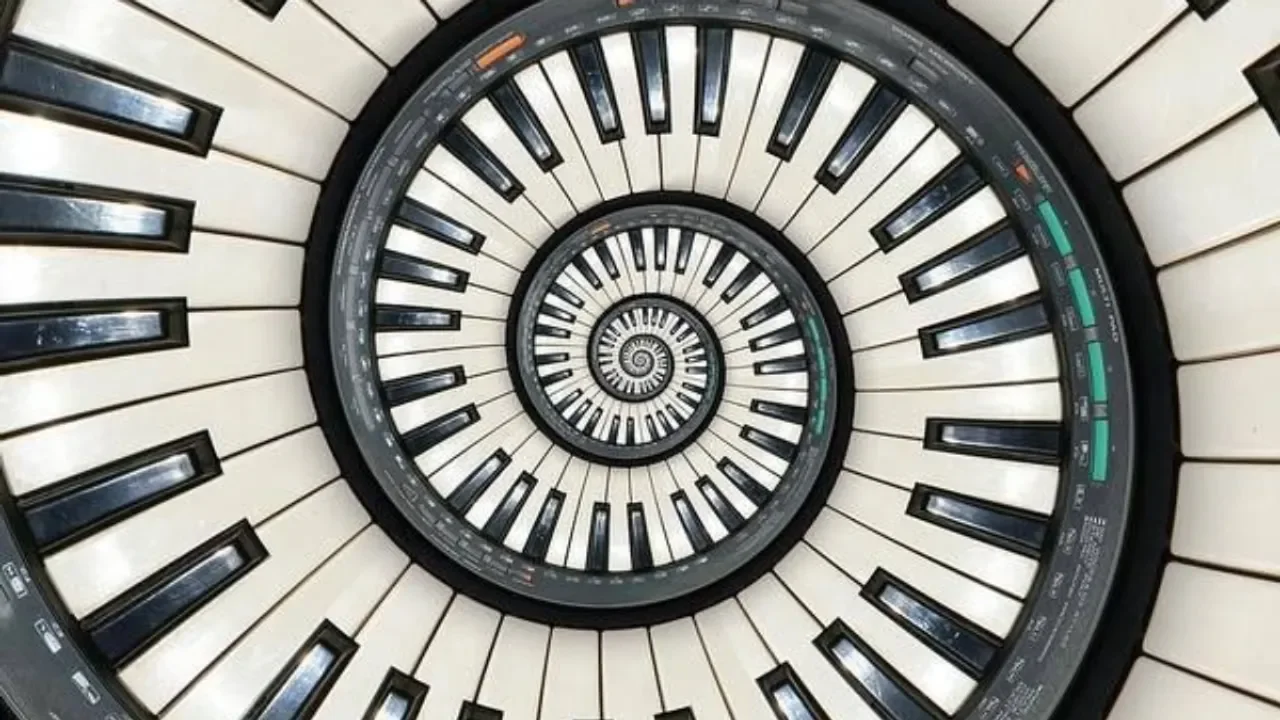
We often think of music as pure emotion—a rush of sound that hits us in the chest. But underneath that feeling, music is an architecture built out of time. Just as a painter uses the Golden Section to guide your eye across a canvas, a composer uses it to guide your ear through a story.
Why the Middle Isn't the Peak
If a song is five minutes long, you’d think the "big moment" should happen right at the 2:30 mark. But in practice, that usually feels a bit... flat. It’s too symmetrical.
Instead, the most hair-raising climaxes usually land around 62% of the way through. It’s that sweet spot where the tension has built up just long enough to feel earned, but there’s still enough time left to breathe before the end. It’s not just a math trick; it’s a reflection of how we actually experience life—think of the way a long exhale feels or the way a wave builds slowly before it finally breaks.
From Bach to the Radio
Classical heavyweights like Bach and Beethoven seemed to have an internal compass for this. If you look at the dramatic return of the main theme in Beethoven’s Fifth Symphony, it lands almost exactly on that Golden Ratio point. Later, Béla Bartók took it a step further, intentionally obsessed with mapping out his notes and phrases to match these natural patterns.
But you don’t need a tuxedo to hear this in action. Listen to almost any great pop song. The bridge usually hits right after the second chorus—roughly two-thirds into the track. It’s that perfect "pivot" moment that keeps the song from getting repetitive and pushes us toward the finish line.
The Instinct for Balance
The best part? You don’t need a degree in music theory to "get" it. We’re wired to respond to these proportions. We recognize them in the way trees grow or the way we breathe.
In the end, the Golden Section isn't a rigid set of rules or a cheat code for a hit song. It’s more like a quiet heartbeat underneath the melody. It’s what makes a piece of music feel less like a sequence of notes and more like something that is—quite literally—alive.